
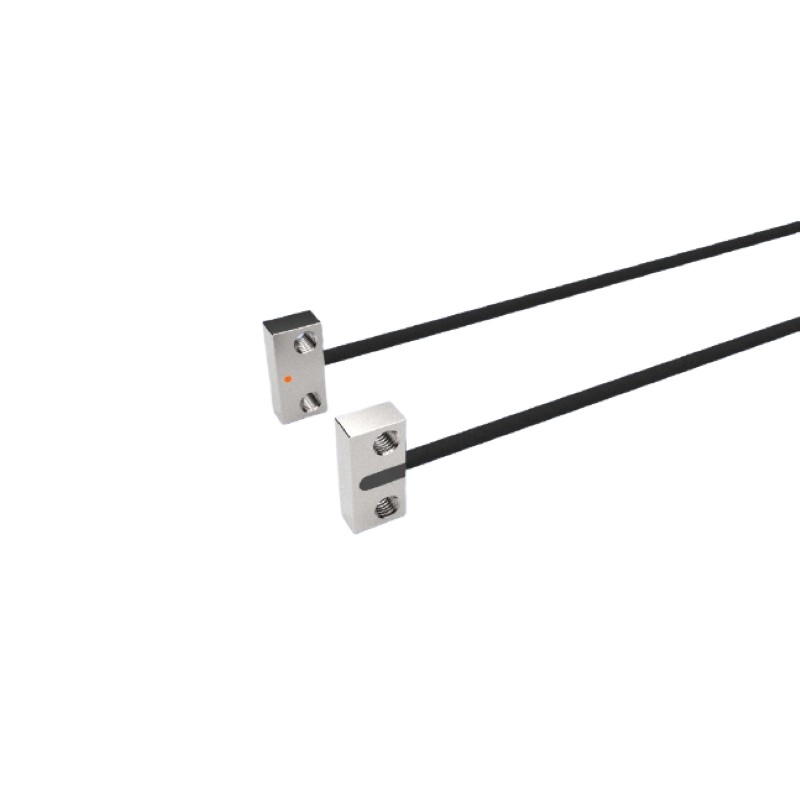
Fiber Optic Sensor Terms: A Layman's Guide
Blog categories
Blog Search
Latest posts
Popular posts
Featured posts

Fiber Optic Sensor Terms: A Layman's Guide
Detection Range
Through-beam: Straight-line distance between the emitter and receiver.
Retro-reflective: Distance from the combined emitter-receiver unit to the reflector.
Diffuse/Retro-reflective/Distance-set: Straight-line distance between the emitter-receiver and the object being detected.
Hysteresis Distance
The gap between the "action distance" (when the sensor triggers) and "reset distance" (when it stops triggering) — mostly for diffuse types.
Response Time
The time it takes from when the input light flickers to when the sensor's output turns on/off.
Light Block vs. Light Detect
Light Block: Output triggers when the light beam to the receiver is blocked or dimmed.
Light Detect: Output triggers when more light hits the receiver.
Self-Diagnosis
Checks if the light level is stable. Most sensors have a green "stable" light — if both green and orange lights are on, detection is steady. It’ll output an alert if something’s off.
External Input Check
Short the "pink" and "blue" wires of a through-beam emitter to turn off the light anytime. Test: If no object is between emitter and receiver (before use), toggle the emitter on/off. If the receiver’s output doesn’t change, the sensor’s broken.
Standard Test Object
Through-beam/Retro-reflective: Use a big opaque object — size based on the optical structure’s diagonal. Through-beam uses the emitter-receiver diagonal as the object’s length; retro-reflective uses the reflector’s diagonal as the object’s diameter.
Diffuse: A large white paper, sized by the emitter’s beam width.
Posted in:
Fiber Optic Sensor
Leave a comment
Log in to post comments